Most real estate leads don’t disappear because they weren’t interested. They disappear because nobody followed up with them in a way that matched how they actually communicate, on a schedule that held up once the phone started ringing with other things.
If you want the short answer: a follow-up system that works is written down before you need it, runs across more than one channel, and uses automation to handle timing so your own memory and mood on a Tuesday afternoon aren’t the thing standing between a lead and a closed transaction. The rest of this article walks through what that looks like in practice, including the text and email rules you need to know before you automate anything.
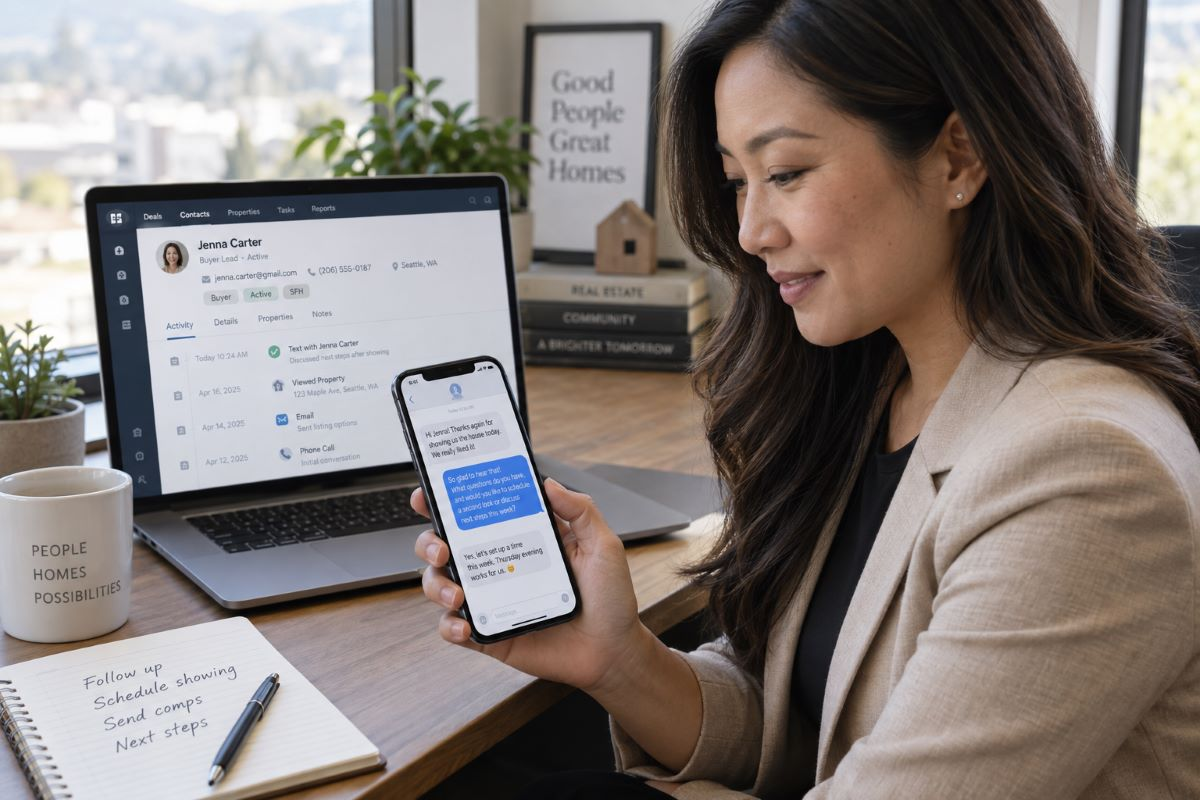
Why Most Leads Never Get a Real Follow-Up
The typical pattern looks like this: a lead comes in from a website form, a Zillow inquiry, or an open house sign-in sheet. The agent calls once, maybe leaves a voicemail, sends a text a day or two later if they remember, and then the lead quietly falls off the list once a new one arrives. Nothing about that sequence was planned. It’s just what happened to fit into a busy day.
That gap matters more than it seems. In RealtyLeadPilot’s earlier piece on common real estate website mistakes, delayed follow-up is called out as one of the most common ways agents lose leads they already paid to generate. A lead who filled out a form or clicked “schedule a showing” was ready to act in that moment. Every day that passes without a response is a day they can find another agent, another listing, or simply lose the urgency that got them to reach out.
The fix isn’t working harder. It’s building a system that doesn’t depend on you remembering.
What a Follow-Up System Actually Needs
A real system has three parts, and skipping any one of them is usually why past efforts have fizzled out.
1. Capture the Right Information at the Start
Every lead should enter your pipeline with more than just a name and a phone number. Note the source (open house, website, referral, past client), what they asked about, and the property or neighborhood involved. A follow-up message that references a specific home is far more likely to get a reply than a generic “just checking in.”
2. Build a Written Sequence Before You Need It
Decide in advance what happens on day zero, day one, day three, day seven, and day fourteen, and then keep going with a lighter monthly touch for anyone who hasn’t converted. A simple version looks like this:
- Day 0: Phone call attempt, followed immediately by a text if there’s no answer.
- Day 1: A short, specific email referencing what they inquired about.
- Day 3: A second text with a useful resource, like a link to search current listings.
- Day 7: An email with something of value, such as a market update for the area they asked about.
- Day 14: A direct check-in asking if their plans have changed.
- Monthly after that: A low-pressure nurture touch until they buy, sell, or ask to stop hearing from you.
Writing this down once means every lead gets the same standard of attention, whether it’s your first week in the business or your busiest month ever.
3. Let Automation Handle Timing, Not Judgment
Automation should be responsible for remembering when to send the day-three text and when to escalate a lead who’s gone quiet. It should not be responsible for deciding whether a lead sounds serious or writing every message from scratch. The best setups use automation to trigger the sequence and a real person to jump in with a phone call the moment a lead responds, asks a specific question, or shows the kind of urgency that only a human should handle. For the appointment itself, a connected booking system removes one more excuse for delay; RealtyLeadPilot’s guide to appointment scheduling for real estate agents covers how to make booking a showing as frictionless as the follow-up that leads to it.
Text Message Follow-Up: What the Rules Actually Require
Automated or templated text messages fall under the Telephone Consumer Protection Act, and the rules tightened in ways worth knowing before you set up bulk texting. Under the FCC’s current guidance, prior express written consent for marketing calls and texts must be given one-to-one: a single consent can no longer authorize messages from multiple unrelated sellers, and the disclosure a lead signs needs to clearly name the specific business that will be texting them and keep the content tied to what they actually inquired about (FCC consent order, effective January 2025). In practice, that means your lead capture forms should include a clear, specific opt-in for text messages from your business, not a vague blanket checkbox borrowed from another industry. This is general information, not legal advice, so it’s worth a quick review with your broker or an attorney before you finalize your consent language, especially since this area of law has continued to shift.
Email Follow-Up: Staying Useful and Staying Compliant
Email is more forgiving than text, but it isn’t unregulated. The FTC’s CAN-SPAM Act requires that your “from” and subject lines accurately represent who’s sending the message and what it’s about, that commercial emails include your business’s real postal address, and that every message offers a clear, working way to opt out, honored within ten business days (FTC CAN-SPAM compliance guide). None of this is difficult to meet. It just needs to be built into your templates once so you’re not thinking about it every time you send a message.
A Realistic Example
Consider a hypothetical agent we’ll call Dana, who works with a small team in a mid-sized suburb. Before setting up a real sequence, Dana’s leads got a same-day call about half the time and nothing after that. After documenting a 14-day sequence and connecting it to her CRM, every new lead automatically received a same-day text, a day-one email referencing the property they viewed, and a day-three follow-up if they hadn’t responded. Dana still made the calls herself, but she no longer had to remember when to make them. Over a few months, more leads booked a showing simply because nobody fell through the cracks between form submission and phone call.
Common Mistakes That Undo a Good Follow-Up System
- No documented consent trail. If you can’t show when and how someone agreed to receive texts, you’re exposed regardless of intent.
- Too many manual steps. If sending the next message requires you to remember and do it by hand, it will eventually get skipped.
- Follow-up that stops at the first “no answer.” Most buyers and sellers don’t respond to the first attempt. A system that gives up after one try is barely a system.
- Generic, unspecific messages. “Just checking in” gets ignored. A message that references the actual property or question gets a reply.
- No plan for old leads. Leads from six months ago aren’t dead; they’re often just further out. A quarterly reactivation touch can turn up transactions other agents have already written off.
How RealtyLeadPilot Helps
RealtyLeadPilot’s lead generation and follow-up services are built around exactly this kind of system: automated email and text sequences, CRM organization that keeps every lead’s history in one place, and appointment booking that connects directly to your calendar. If your current process depends on sticky notes or a memory for who you talked to last week, a free strategy call is a low-pressure way to see what a documented system would look like for your business specifically.
The Bottom Line
A lead going cold usually isn’t a sign that they weren’t serious. It’s a sign that follow-up depended on something that eventually broke down: your schedule, your memory, or your energy on a slow news day. Write the sequence down, automate the timing, keep your consent and compliance in order, and let the humans on your team do what only they can do, which is talk to people at the moment it actually counts.